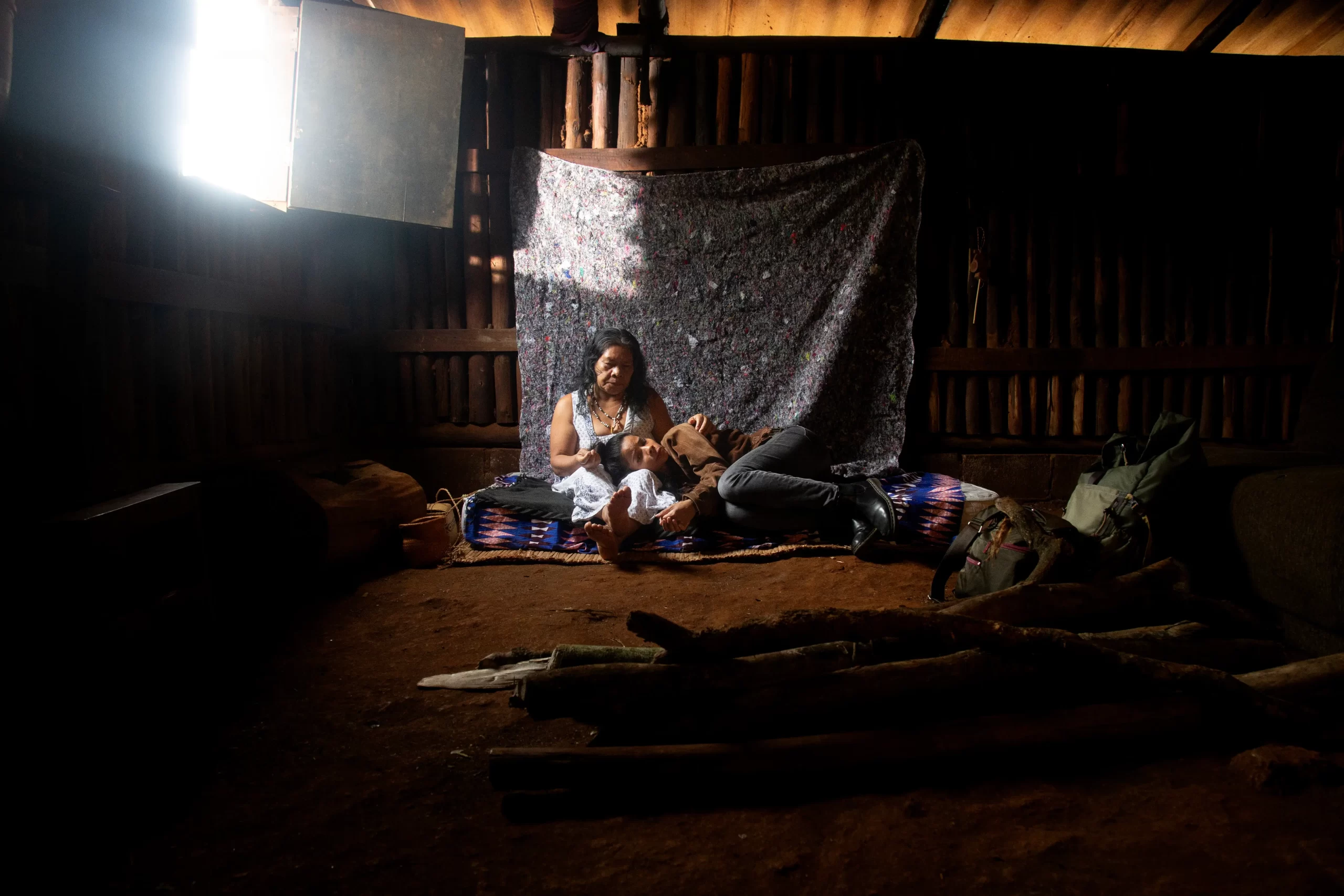
Cleo, a pregnant astronomer, receives a visit from her half-sister Nalu, who reveals a disturbing secret. Weeks later, Cleo finds suspicious activity on her husband’s computer, leading to profound consequences.
ECLIPSE, by Djin Sganzerla, is an essential film for the current Brazilian and global moment.
Interweaving aesthetics and politics, dense characters and a well-crafted screenplay, under excellent overall direction, Eclipse prompts reflection on the culture of patriarchal-colonial violence and how women can survive it.
Eclipse unfolds amidst opposing forces within a thought-provoking internal geometry. Visible and invisible, what is and what appears to be, produce a play of shadows between the film’s colors. Nature and culture, sky and earth, forest and city, animal and human, man and woman, feminine and masculine, intuition and science, reason and sensibility, captivity and freedom are the opposing forces, sometimes in communion, sometimes in conflict, that structure the plot.
Perhaps the jaguar is its main character, even though it seems like a parallel factor punctuating the narrative involving the two sisters, Cleo and Nalu. In Amerindian cosmologies, the jaguar is the most powerful of beings. The “jaguar” is the destiny of heroes. In Eclipse, it is an emblem of the woman attacked and “hunted,” but who, by her very nature, does not yield to her survival instinct intimately linked to dignity, freedom, and autonomy. Courage is the most basic reaction to the violation of these values.
From Nalu’s escapes through the woods to the scene where Cleo crosses the house and reaches the street, what we see is the affirmation of the jaguar as destiny. Distributing the narrative’s imagistic energy, the jaguar is the link between the two sisters who, each in her own way, fulfill their destiny of becoming the jaguar themselves. This is the case with Nalu, the indigenous sister, bearer of the jaguar’s spirit since her home in the forest where an ancestral grandmother lives. Cleo becomes the urban sister, an astronomer, who receives a sculpture in the shape of a jaguar’s head as a gift from Nalu’s grandmother, an emblem of her familial recognition.
The plot revolves around the encounter of these women whose historical bond is one of blood and violence, while a supra-historical bond of recognition develops throughout the narrative, culminating in the sisters’ love for one another and the establishment of sisterhood. Nalu was abused by her father, while Cleo will recall that her father also abused her in childhood.
Despite this abject bond, they become women who learn to defend themselves, who are free, wise, and dignified. Sisterhood is the notion that emerges and asserts itself throughout the film. But the encounter between them is also marked by what Vilma Piedade called “dororidade” — a solidarity rooted in shared pain. The pain that unites them is the same pain that leads them to fight together.
In this context, female solidarity is confronted with male fraternity. It is the power of sisterhood, of sisterly love, that will unmask the falseness of Cleo’s husband. Loving towards his wife at home, he has a hidden practice. Along with a group of men, including his own father, he participates in parties where recreational rapes of young women are practiced. The husband’s character is an emblem of predatory patriarchy, of abject fraternity, which seduces to create victims, which deceives, lies and manipulates behind the mask of a good man, a concerned son and a family man, while secretly practicing his criminal perversions. The house where Cleo lives, therefore, is not simply a home; on the contrary, its character as a captivity will become clear. The “caregiving” husband is, in fact, the predator in the lurking position, analogous to the handler of the jaguar in the zoo. The screenplay provides the path to this conclusion about the captive female jaguar: right at the beginning of the film, Cleo is driving the car and, feeling nauseous because she is pregnant, needs to stop to vomit at the exact moment she hears on the radio that a jaguar held in captivity has attacked its caretaker.
Thus, the film subtly demystifies the patriarchal system: the deception of romantic love, the charade of the perfect husband and family, the home presented as a dangerous territory where motherhood can be a trap. Eclipse is a sequence of “eclipses” that reveal what the patriarchy would like to keep hidden and what a woman “astronomer,” the emblematic woman of wisdom, research, patience, and firmness, will know how to name.
The film makes no apology for “overcoming,” “resilience,” or anything of the sort; it doesn’t mystify clichés. On the contrary, it presents them in order to elegantly dismantle them. Furthermore, Eclipse makes it clear that, despite the personal strength of women, they need each other to survive the violence directed at them in the predatory circle of patriarchy.
A visual essay on sisterhood, Eclipse is the story of the building of love between sisters and a struggle for a good and fair life.
Text by Márcia Tiburi
TOTAL ALIGMENT





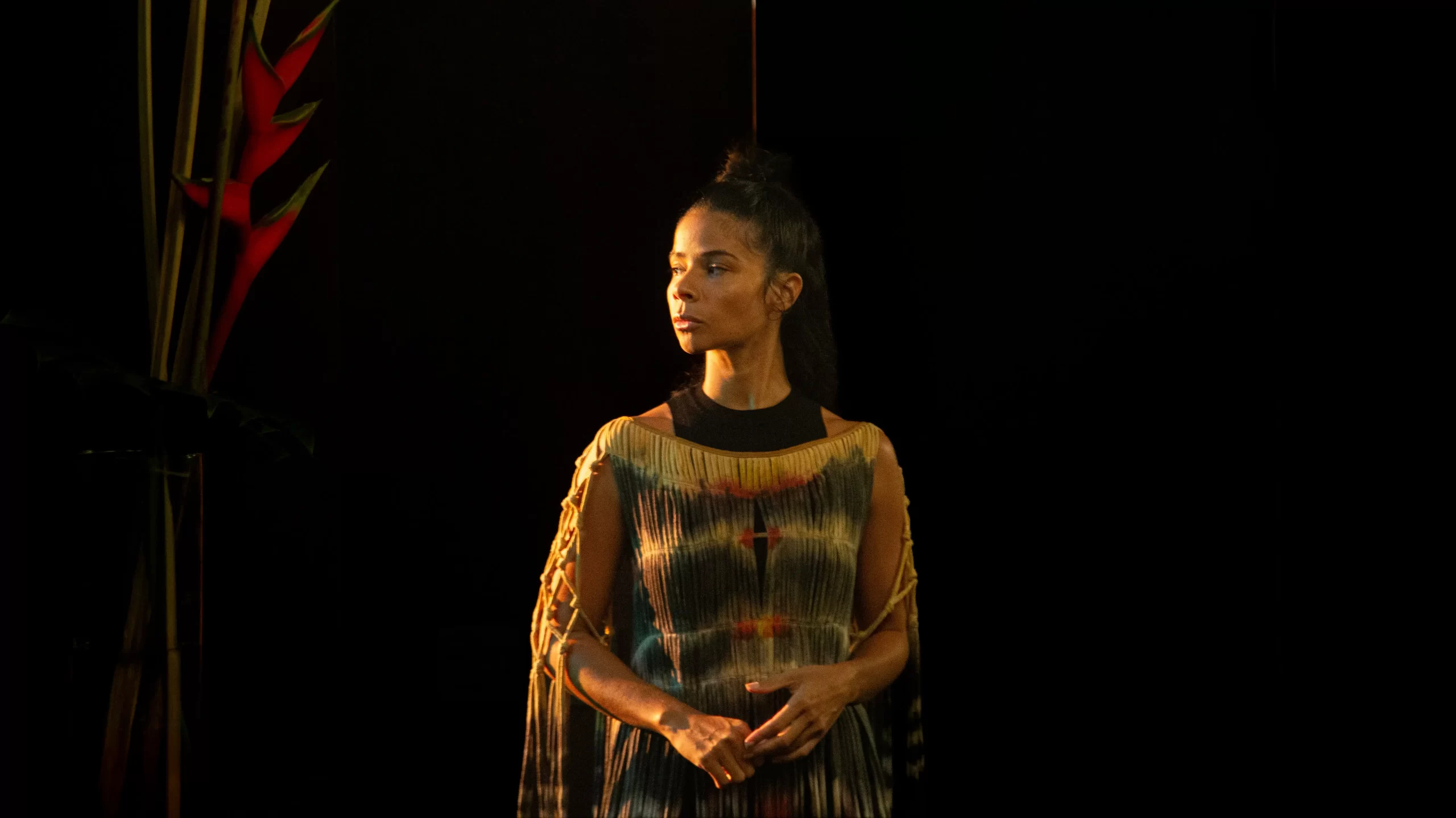


Cleo
Tony
Nalu
Lucélia
Mr. Roberto
Gilda
Folha de São Paulo /
/ Out. 2025

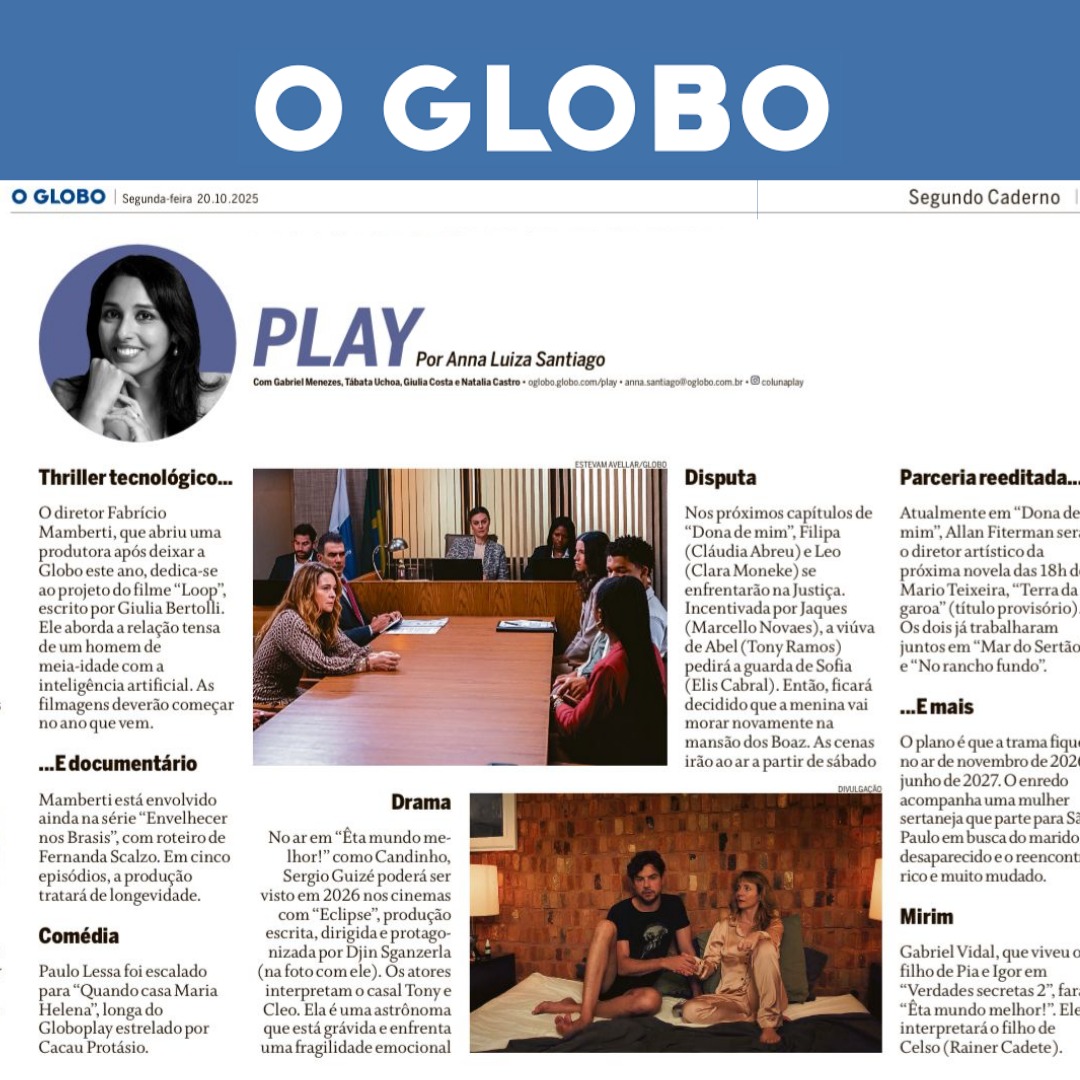
O Globo /
/ Out. 2025
Estadão /
/ Out. 2025

A well-constructed and well-photographed thriller that adapts to contemporary themes, an obsession of current Brazilian cinema.
Revista de Cinema /
/ Out. 2025

Films pre-nominated for the Oscars will compete for the Bandeira Paulista Trophy with “Eclipse.”
Instituto Moreira Salles /
/ Out. 2025

Eclipse, by Djin Sganzerla. In her second feature as a director, Djin portrays a pregnant astronomer who reunites with her Indigenous half-sister and, at the same time, accidentally discovers on the deep web a parallel
Mulher no Cinema /
/ Out. 2025

Djin Sganzerla is the director, screenwriter, producer, and protagonist of Eclipse, a feature film that is part of the program of the São Paulo International Film Festival, which takes place from October 16 to 30.
Correio da Manhã // Rodrigo Fonseca /
/ Out. 2025

ECLIPSE, by Djin Sganzerla: Five years after her directorial debut with Mulher Oceano (2020), the award-winning actress of Falsa Loura (2008) narrates the saga of Cleo, a 43-year-old pregnant astronomer (played by…).
Djin
Sganzerla
Djin Sganzerla is a film director, actress, screenwriter, and producer. She began her career as an actress, working with some of the most respected filmmakers in the country and receiving several awards, including the APCA Award for Best Film Actress.
In 2020, she released her first feature film as a director, Ocean Girl, which she wrote, directed, and also acted in. The film participated in festivals in Brazil and abroad, winning 15 awards, including Best Film at the Porto Femme International Film Festival, Portugal. For her work, Djin was nominated for the 2021 Grande Prêmio do Cinema Brasileiro (Brazilian Cinema Grand Prize) in the Best First Feature Film Direction category, and for the Brazilian Association of Screenwriters (ABRA) Award for her screenplay.
In 2022, she directed and screenplayed, alongside André Guerreiro Lopes, the short film Before Tomorrow. The work received the Special Jury Prize and the Best Photography Award, and was screened at festivals such as the 33rd São Paulo International Short Film Festival and the Beijing International Short Film Festival, among others.
Her second feature film, Eclipse (2025), was filmed in São Paulo and the Pantanal.
As an actress, Djin has received numerous awards, including Best Film Actress from APCA, Best Actress at the 12th Luso-Brazilian Film Festival in Portugal, Best Supporting Actress at the 39th Brasília Film Festival, and Best Actress at the 24th Cine PE in 2021.
She is a partner in Mercúrio Produções ltda., founded in 2001 by Helena Ignez, Djin, and Sinai Sganzerla. The production company has over thirty films in its catalog and has received numerous awards throughout its history. Djin is the daughter of filmmakers Rogério Sganzerla and Helena Ignez, icons of Brazilian cinema.
Mercúrio
Produções
Mercúrio Produções Ltda., a production company founded by Helena Ignez, Djin Sganzerla, and Sinai Sganzerla, is responsible for all the cinematic works of filmmaker Rogério Sganzerla, in addition to the founders’ own audiovisual productions. The production company has more than thirty films in its portfolio and numerous awards.
FILMOGRAPHY
























ECLIPSE
A film by Djin Sganzerla